

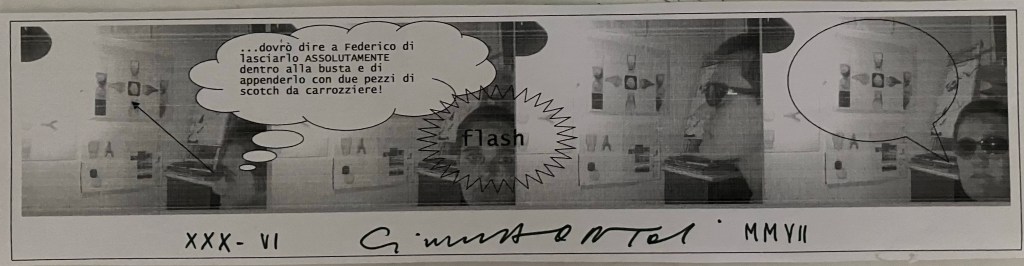
NDN ha dipinto per anni valli aride e desolate; catene montuose che incorniciano enigmatiche discariche in cui riconosciamo i simboli di quello che è passato alla storia come boom economico (lavatrici, automobili,…) e abitate da fieri e solitari animali un po’ domestici e un po’ selvatici, mandati al confino dalla civiltà insieme alle vecchie macchine inutilizzate.
Ora la nuova serie di dipinti è ambientata in uno spazio più ristretto, forse domestico, intimo e che ci chiama alla contemplazione dei dettagli. Il genere non è più quindi il paesaggio ma la natura morta, ma non è certo che si tratti di natura e nemmeno che sia morta. Riconosciamo la forma del sasso, o del concio di pietra scura tagliato in modo rustico. Questo sasso funge da “anima” (nb: “anima” si dice, in Romagna, il nocciolo del frutto) poiché attorno ad esso cresce una polpa aliena, eterogenea, fatta di gelatinose glasse luccicanti che trasudano e colano; globi oblunghi vitrei che penzolano riflettendo un ignoto spazio circostante; lunghe code di pelliccia; grigie gommose placche untuose come plastilina lisciata.
Le composizioni sono centrali ma non esattamente simmetriche come negli ikebana a cui Bruno Munari dedicò il suo libro intitolato “Un fiore con amore”; anche lì era consigliato di porre un sasso, sul fondo del vaso di vetro trasparente, per aggiungere un tocco di mistero.
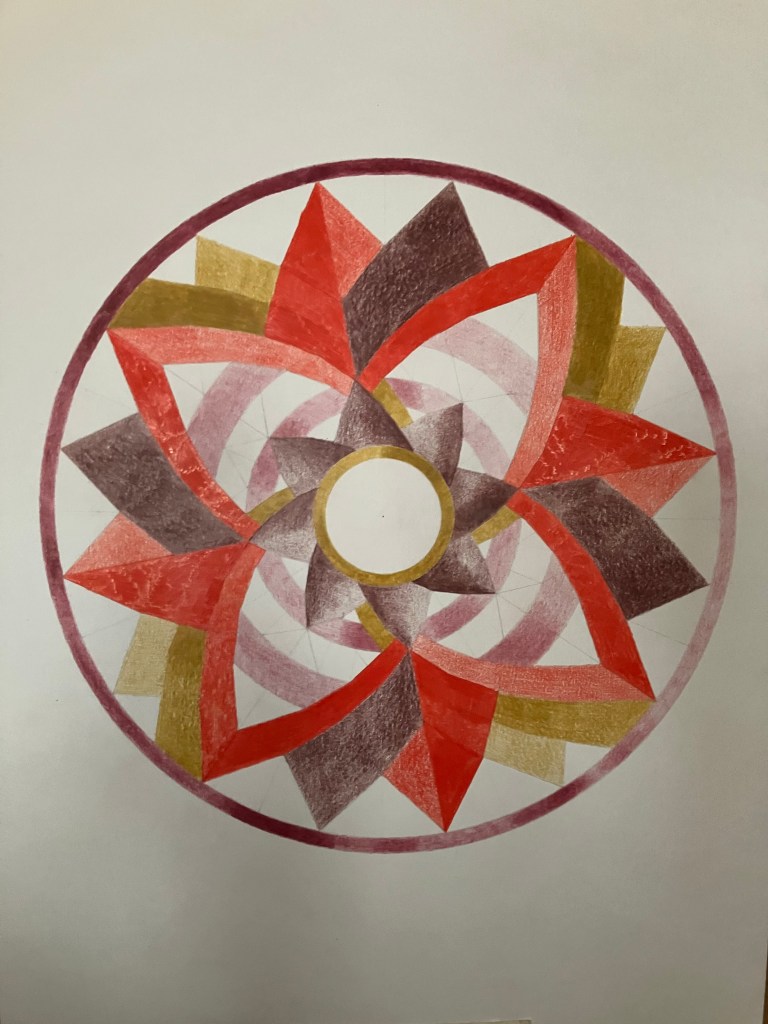
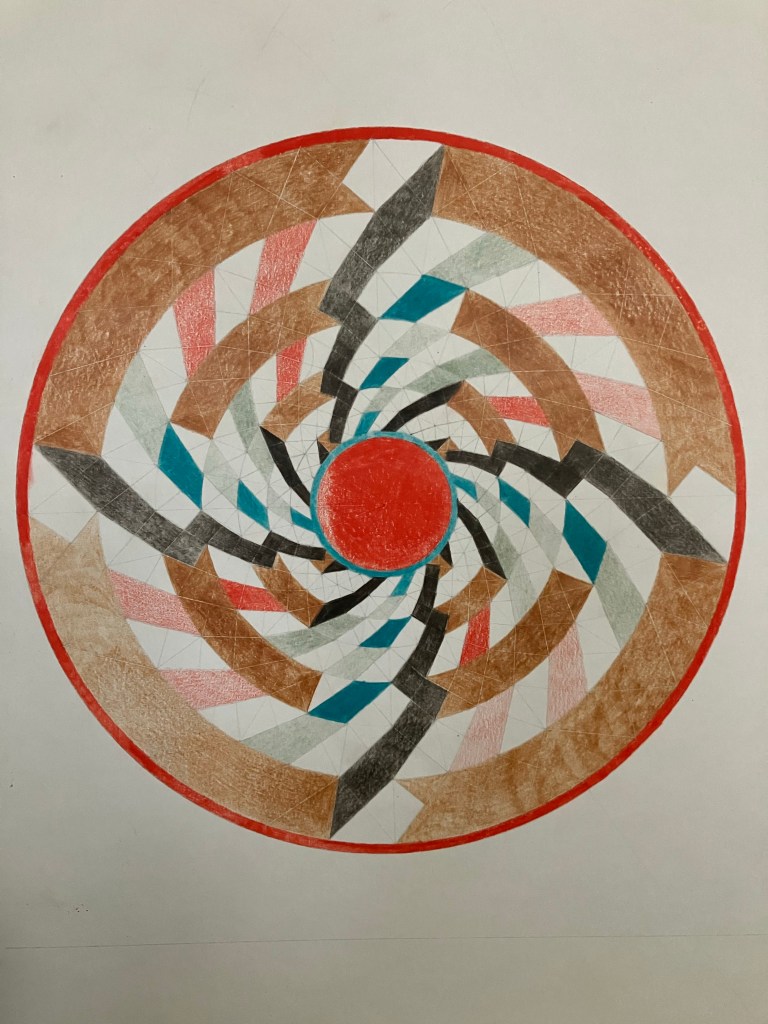
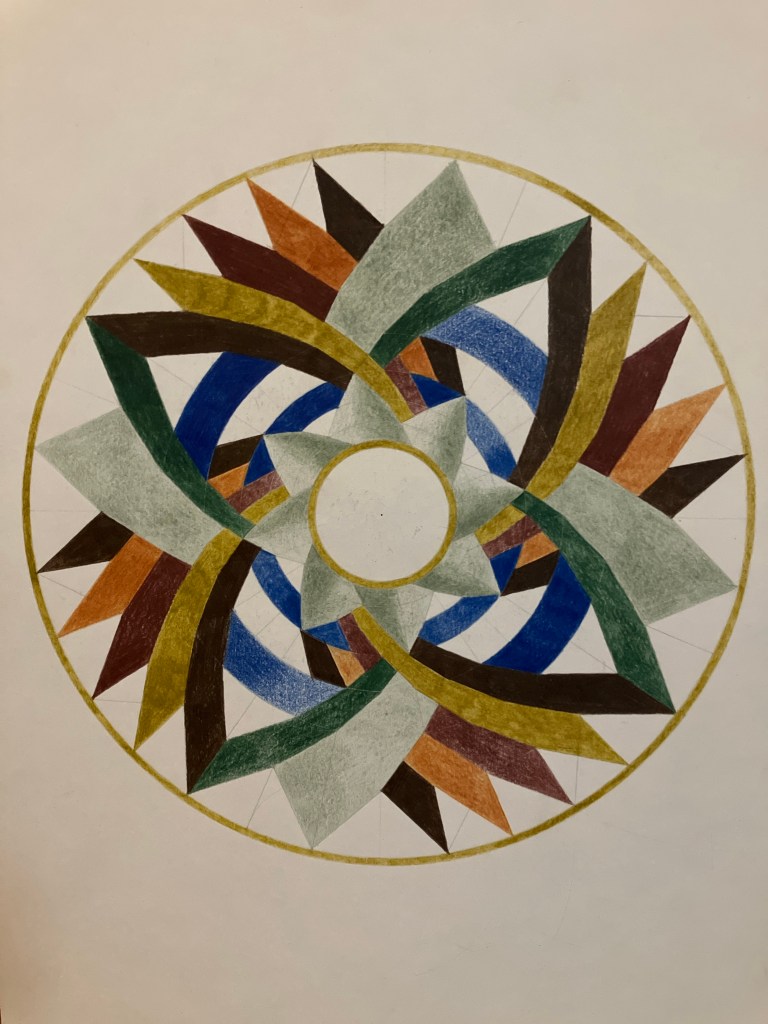

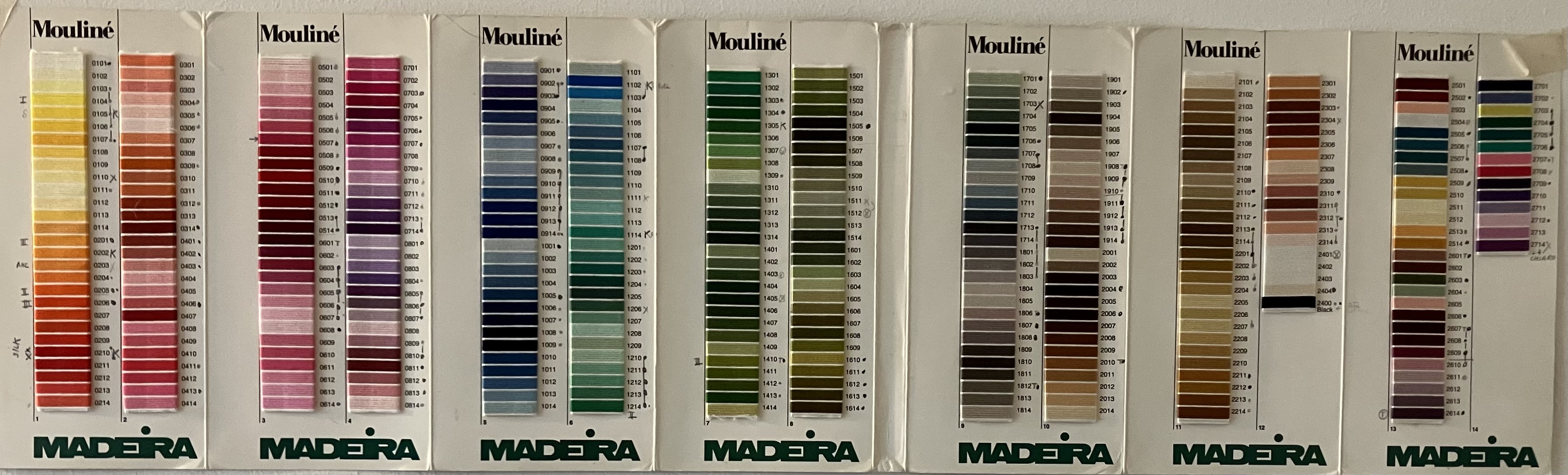
Questa è la cartella colori che uso per il filato da ricamo.
Villa delle Rose, spazio per l’arte contemporanea, non deve essere trasformata in “casa dell’incontro e del dialogo tra religioni e culture”.
L’arte contemporanea ha pochissimi spazi e vanno difesi.

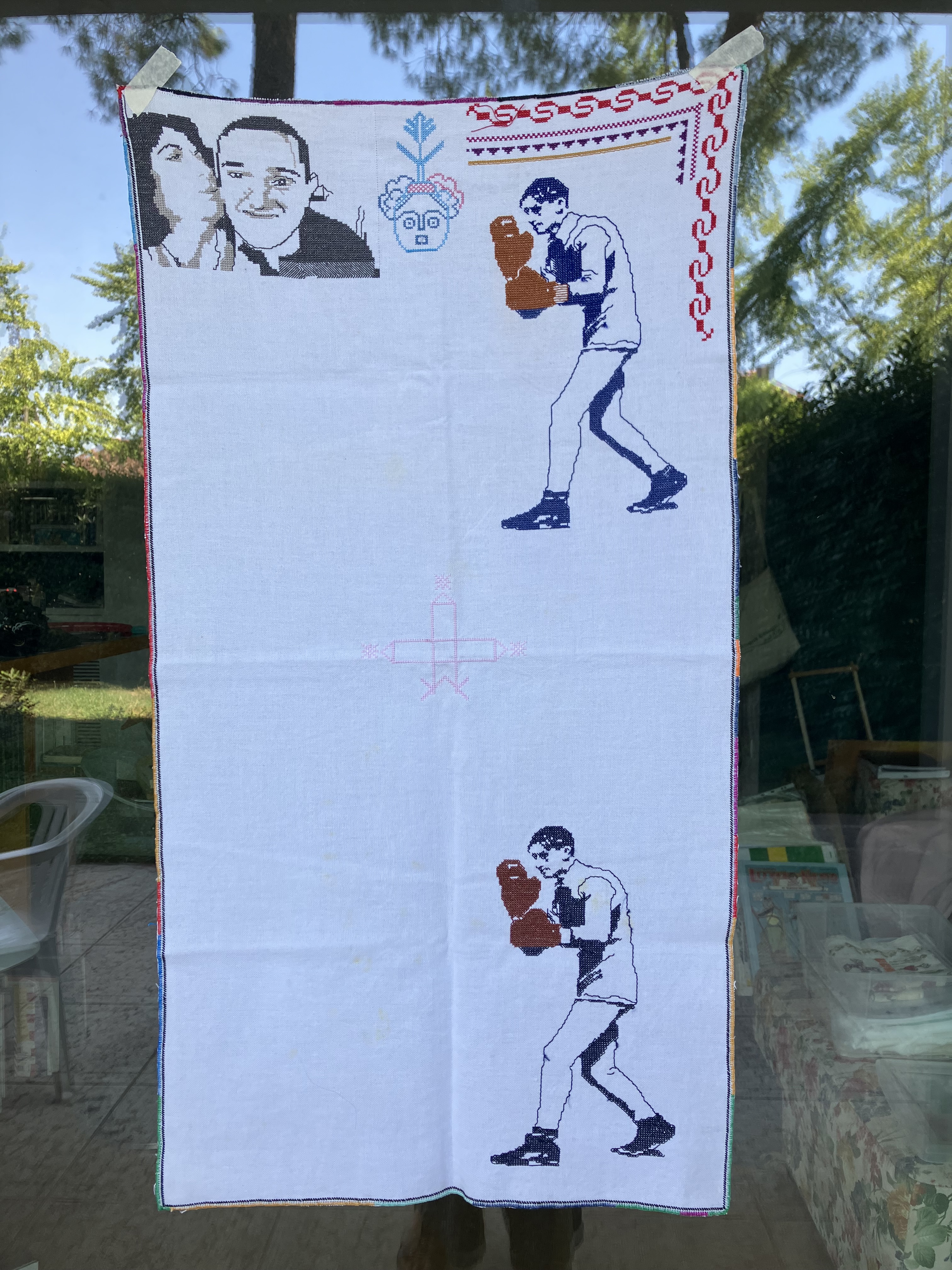
ricamo su cotone etamine, cm 44 x 86, (…)
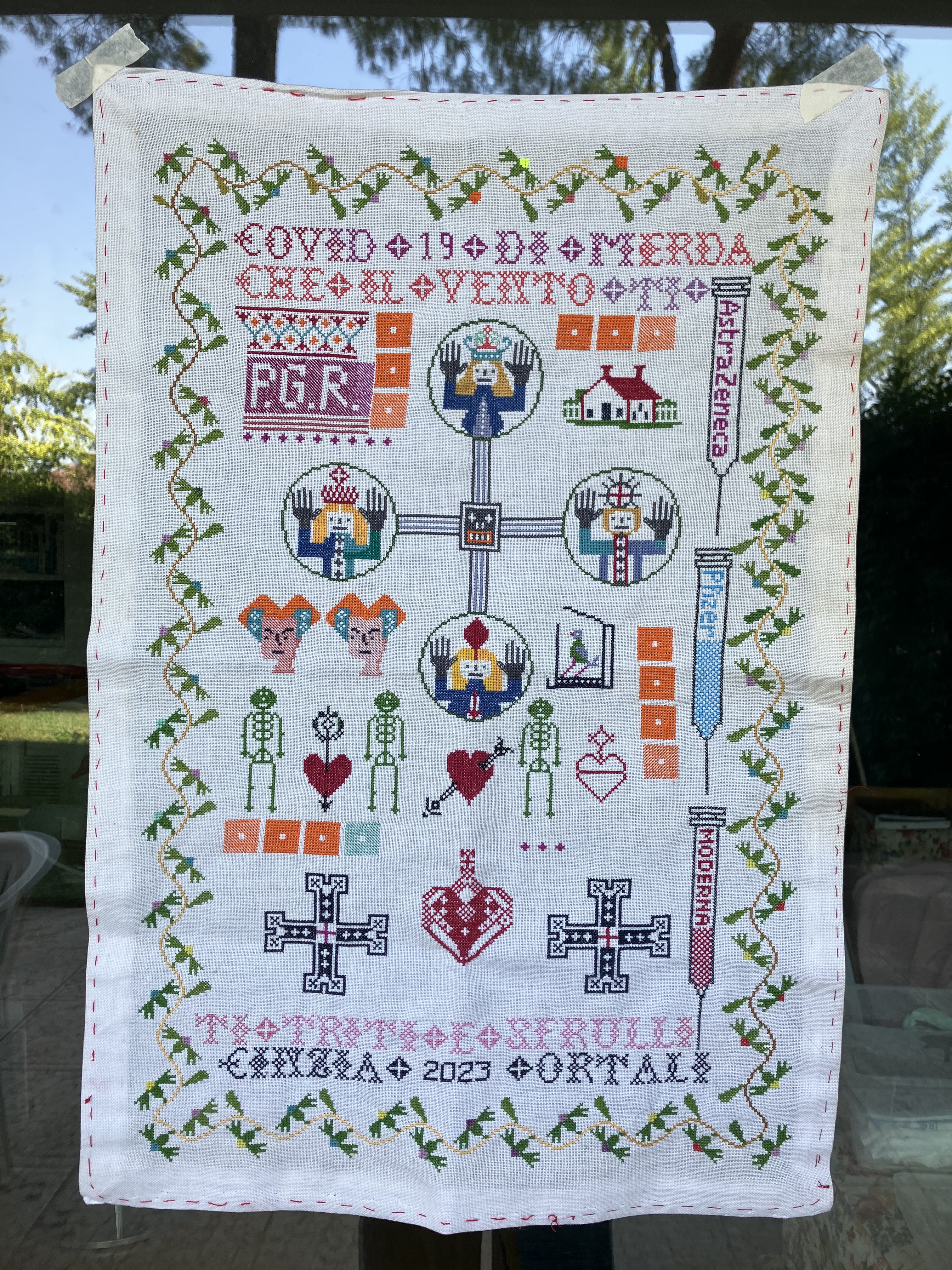
Fatico a mettere ordine nel mio archivio ma talvolta trovo le cose già sistemate, imbustate, datate. Oggi ho caricato 17 foto di acquerelli. Non li ricordavo questi acquerelli eppure mi piacciono. Ringrazio la cinzia di 5 anni fa che ha pensato di farmi trovare un bel pacchetto di disegni ben “stirati” e ordinati. I fogli sono stati imbevuti di colori brillanti tanto da essere colorati anche nel rovescio. La carta è sottile e i disegni sono a china nera e stanno, credo, sotto al colore. Sono disegni astratti di “occhi che fioriscono nella tempesta, eccetera” ma li ho intitolati “Senza Titolo”. Dal menù principale puoi vedere tutta la serie del 2019.
Ho già un’idea su come incorniciarli: lascio scoperto il retro e davanti metto un passe-partout con la foto di un folto bosco di conifere.
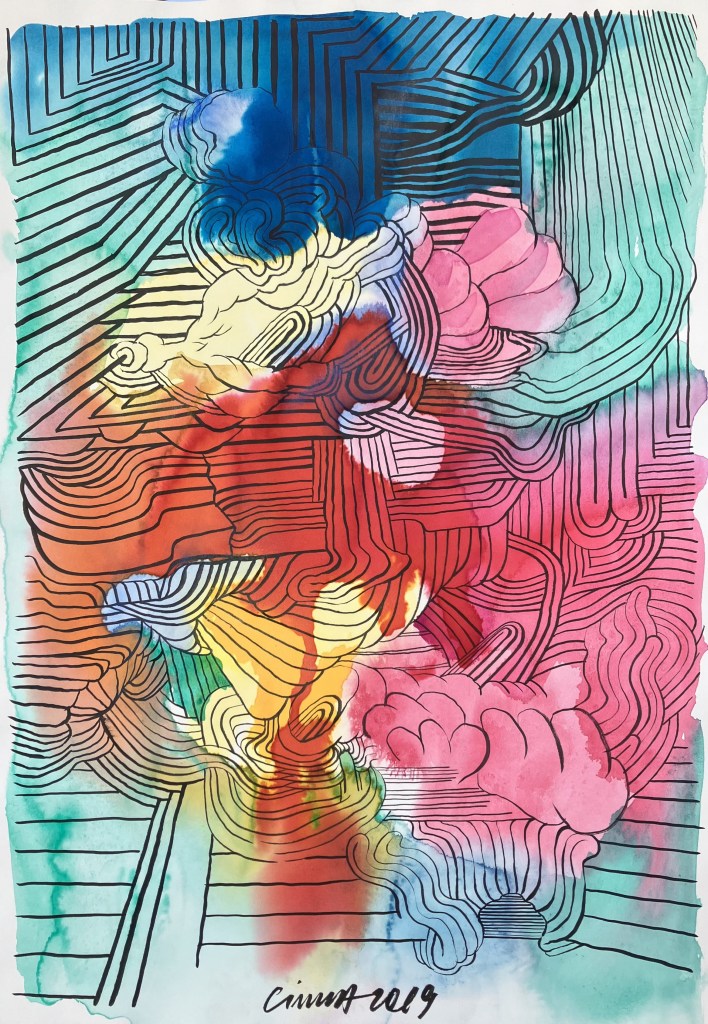

Cinzia Ortali
“Demoni, mostri e prodigi” di Giorgio Ieranò
— Leggi su books.google.it/books
Difficile conoscere a fondo i personaggi della mitologia greca senza sentirsi un po’ confusi e smarriti perché non esiste un libro unico, rivelato, una bibbia, ma piuttosto esiste una costellazione di autori che raccontano vicende di dei, semidei ed eroi con le loro complesse genealogie e parentele. Molte (come poteva non essere così?) sono le fonti citate in questo libro, utile sinossi per chi vuole orientarsi, imparare a riconoscere quei mostri che così spesso troviamo rappresentati nelle opere d’arte, dall’antichità fin nel contemporaneo: gorgoni, sirene, nereidi, fantasmi, vampiri,…
Molte le fonti citate dall’autore, tra le quali spiccano Omero, Luciano1 e Filostrato. Di quest’ultimo in particolare scopriamo il racconto delle vicende fantastiche e miracolose di Apollonio di Tiana, contemporaneo e quasi “gemello pagano” di Gesù. Apollonio incarna la transizione dal paganesimo al cristianesimo. La sua vita, al pari di quella di un santo cristiano è avventurosa: fatta di viaggi e prodigi2.
Cambiano i tempi ma i mostri, ibridi grotteschi, restano: ne abbiamo bisogno per dare forma a qualcosa di astratto ma profondamente vero e concreto per l’anima. Il cristianesimo non aveva obliato l’immaginario pagano che ha mantenuto radici forti e perdura fino ai nostri tempi ultra-moderni e sdivinizzati.
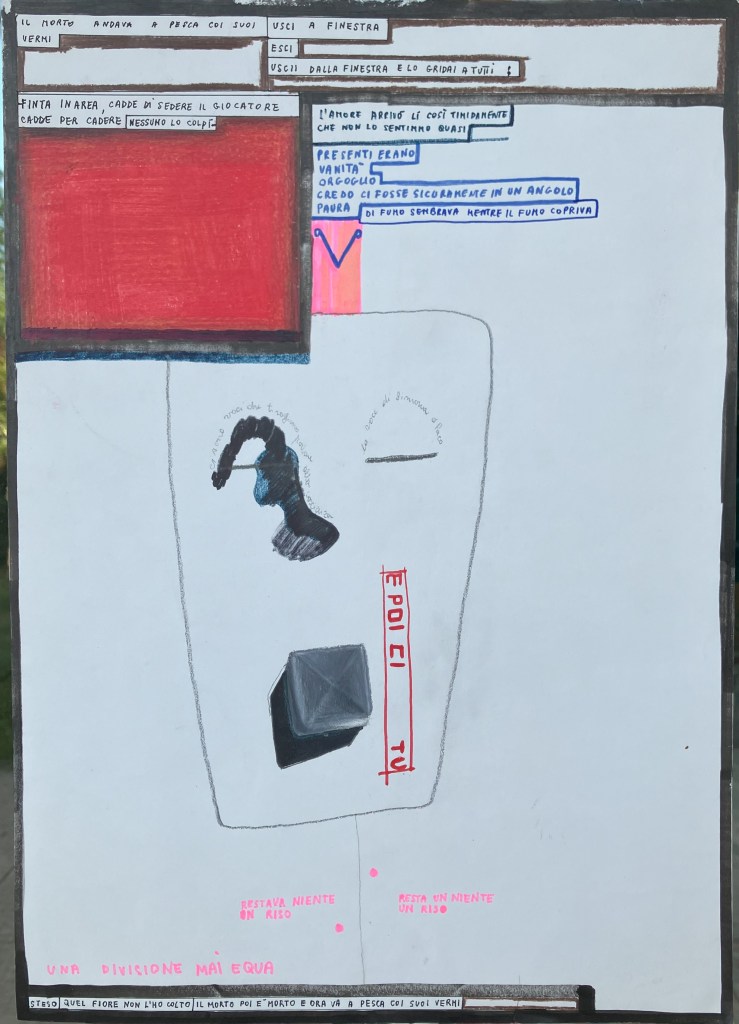


 Portfolio